Forthcoming
The Book on
Power
Why do good people with good ideas lose? Because power isn't what most of us were taught it is. This book offers a lens for seeing it clearly.
The Framework
I spent years working alongside smart, committed people who lost fights they were well-positioned to win. Not because they lacked passion or strategy, but because they could only see part of the board. They'd build political power and get outflanked by economic power. They'd win the moral argument and lose to enforcement power.
The problem wasn't effort: it was visibility. Power takes at least six distinct forms, each with its own rules, its own actors, its own strategies, and most of us were only ever taught to recognize one or two of them.
Each chapter of this book makes one form of power concrete: what it looks like, how it operates, who holds it, and how people without it have built it before.
Darcy Burner has given us a lively and compelling user's guide to the levers of power, with a story to illustrate the workings of every part of the political and institutional machines that control our lives.
The Six Forms of Power
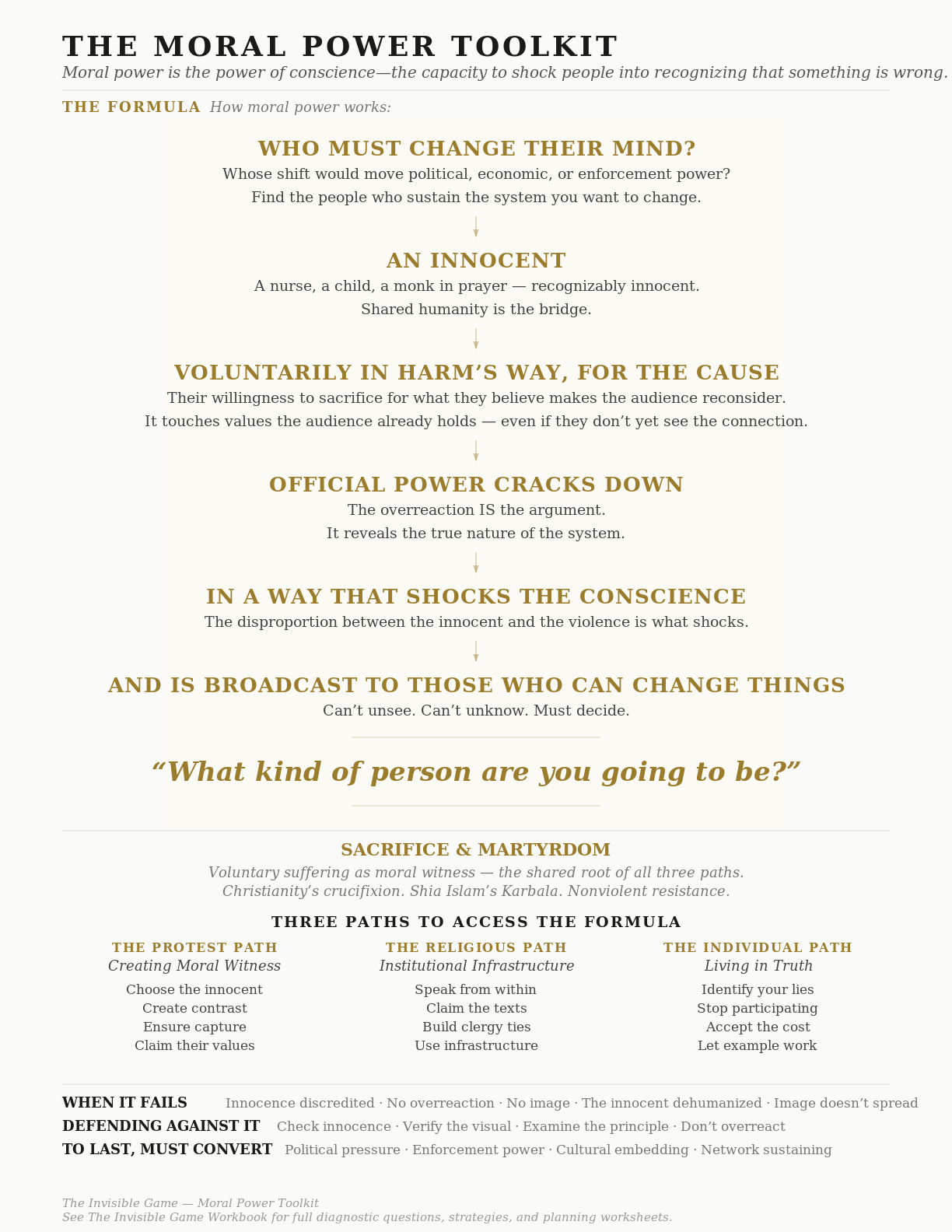
Moral Power
The power of legitimacy, narrative, and moral authority. Who gets to define right and wrong?
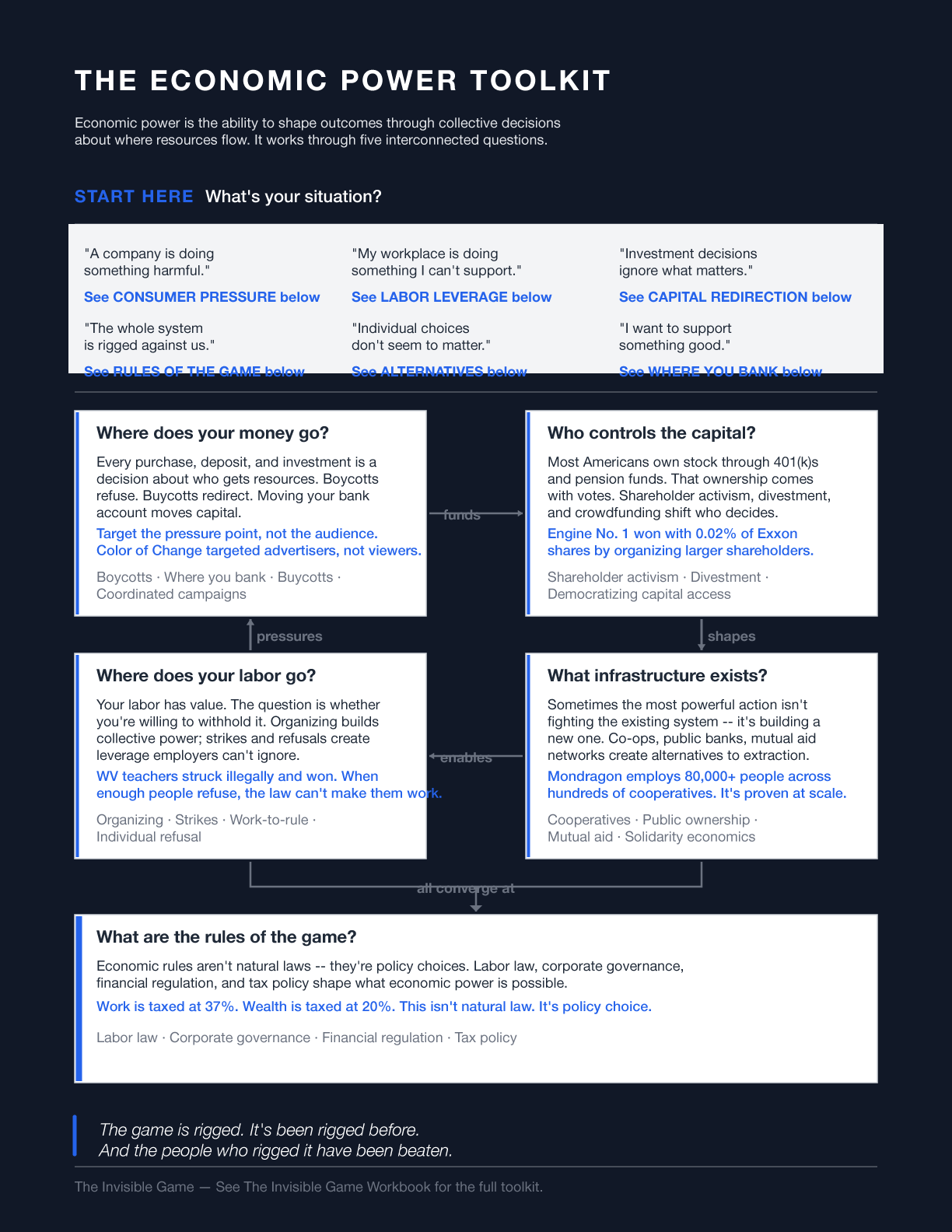
Economic Power
The power of resources, markets, and financial systems. Who controls the flow of money?
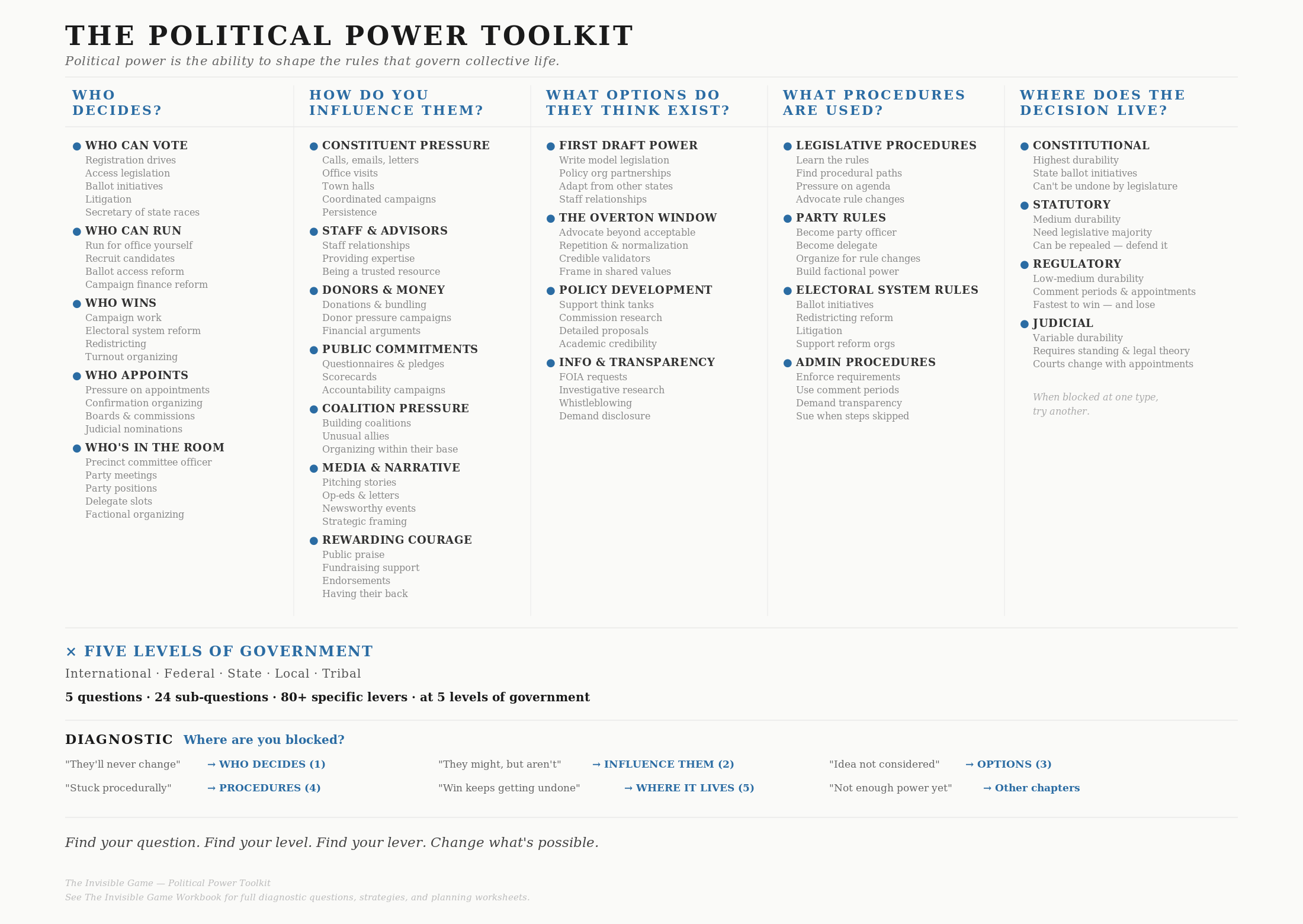
Political Power
The power of governance, law, and institutional authority. Who makes the rules?
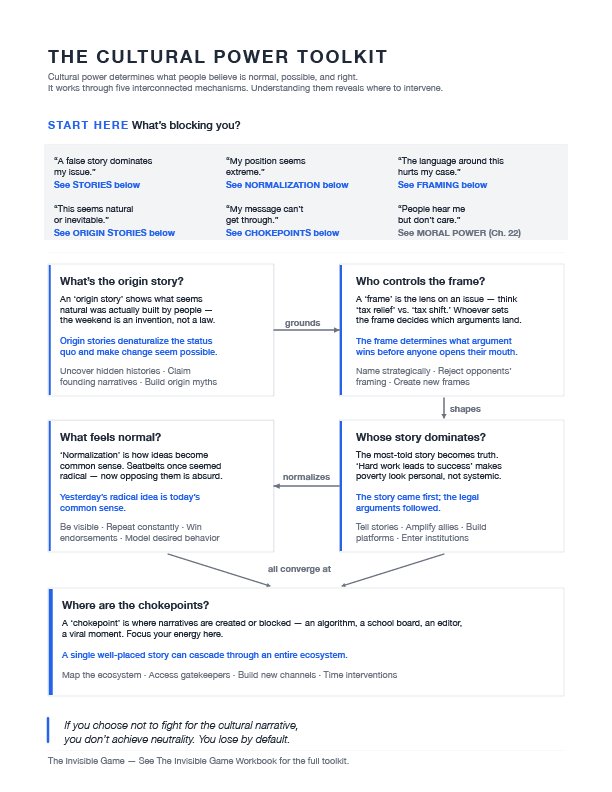
Cultural Power
The power of shared meaning, identity, and social norms. Who shapes what people believe?
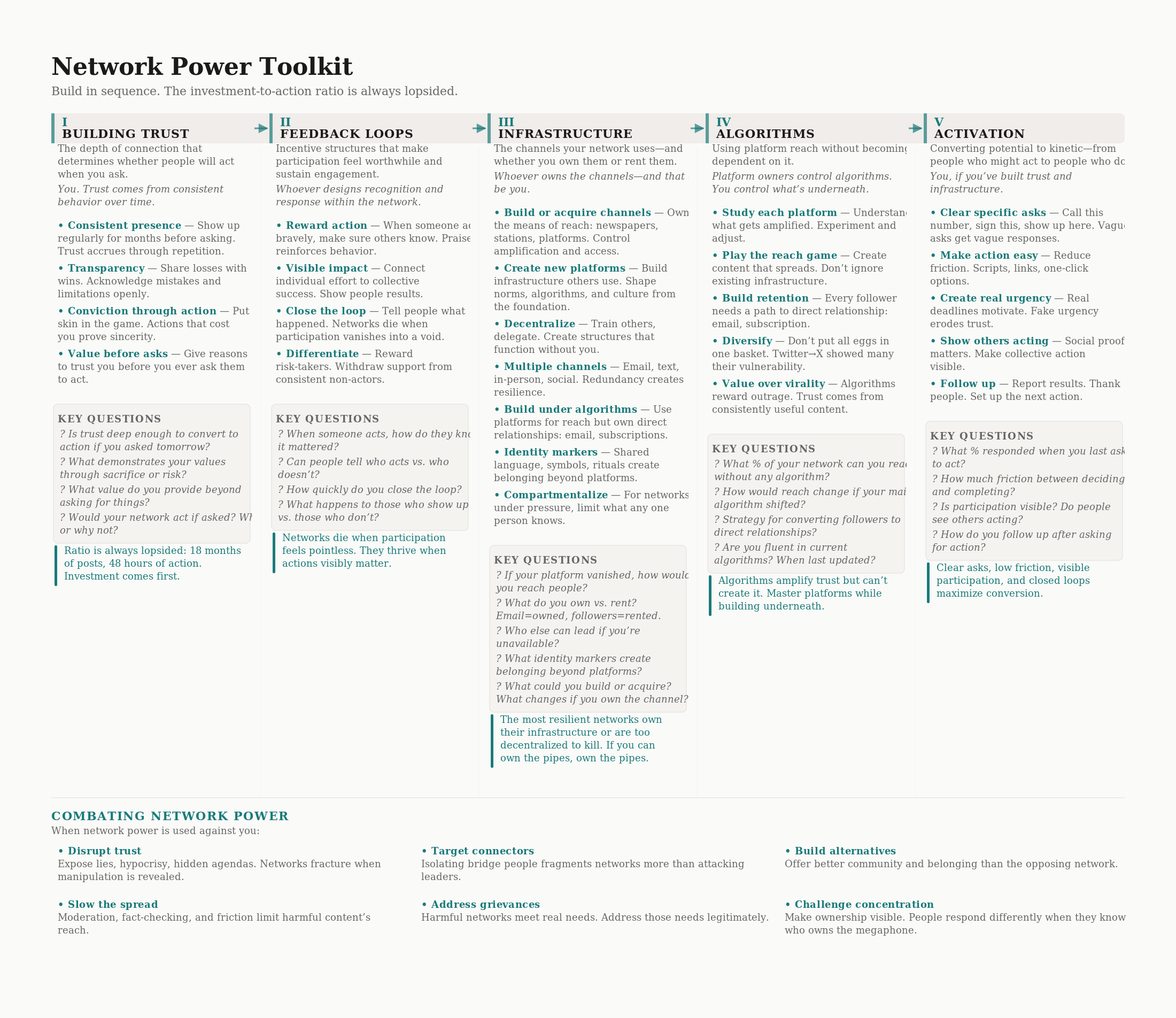
Network Power
The power of connections, coalitions, and collective action. Who can mobilize people?
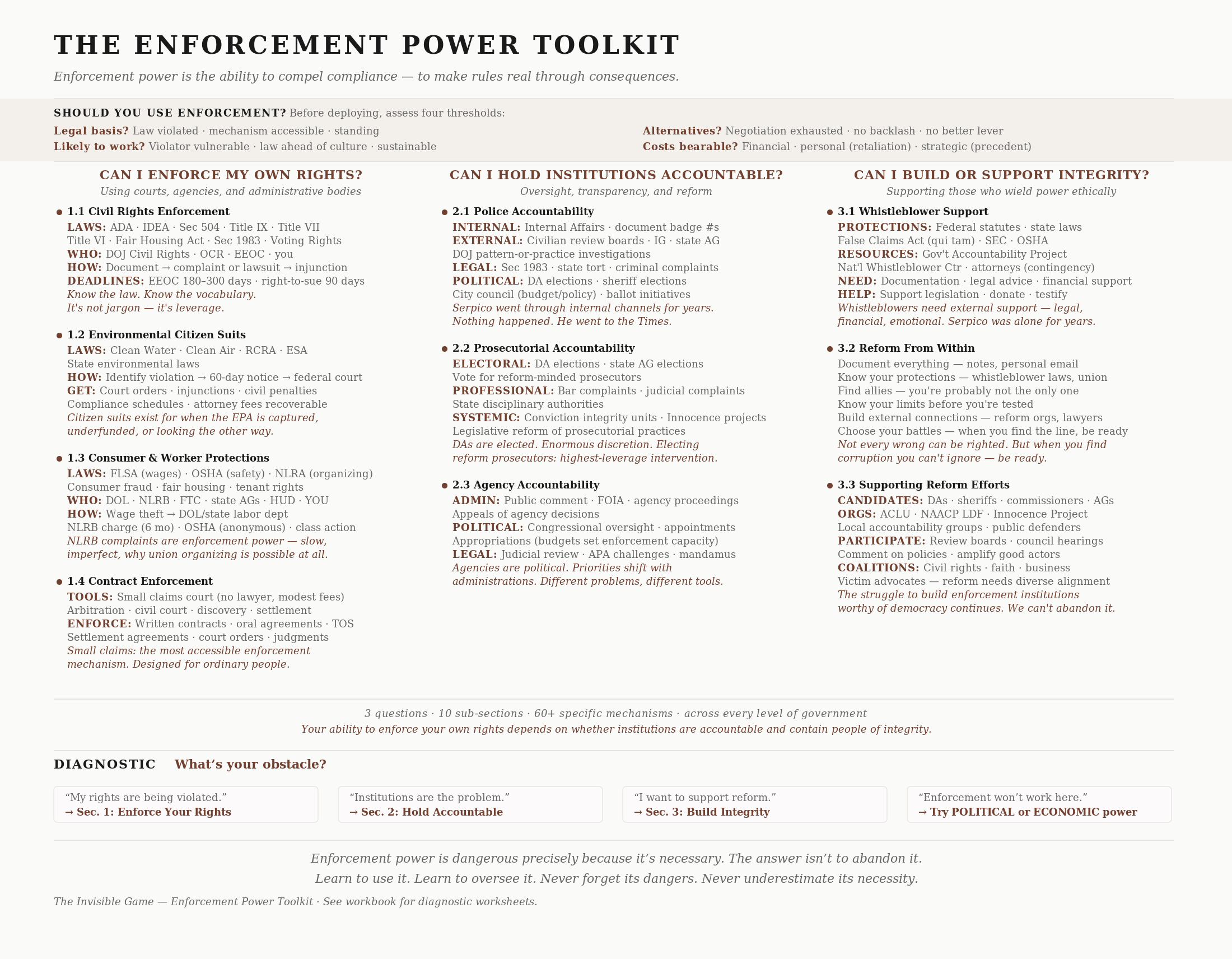
Enforcement Power
The power of coercion, compliance, and consequence. Who can compel behavior?
The Workbook
The companion workbook takes the framework from the book and makes it practical. It walks you through identifying which forms of power are at play in the issues you care about, where the gaps are, and what building the power you need would actually look like. It works for individuals and works even better for groups.
The workbook is also the foundation of the bootcamp training program, where communities work through the exercises together.
Currently With Publishers
The book is fully drafted and with publishers now. If you want to know when it's coming out, this is the place.